
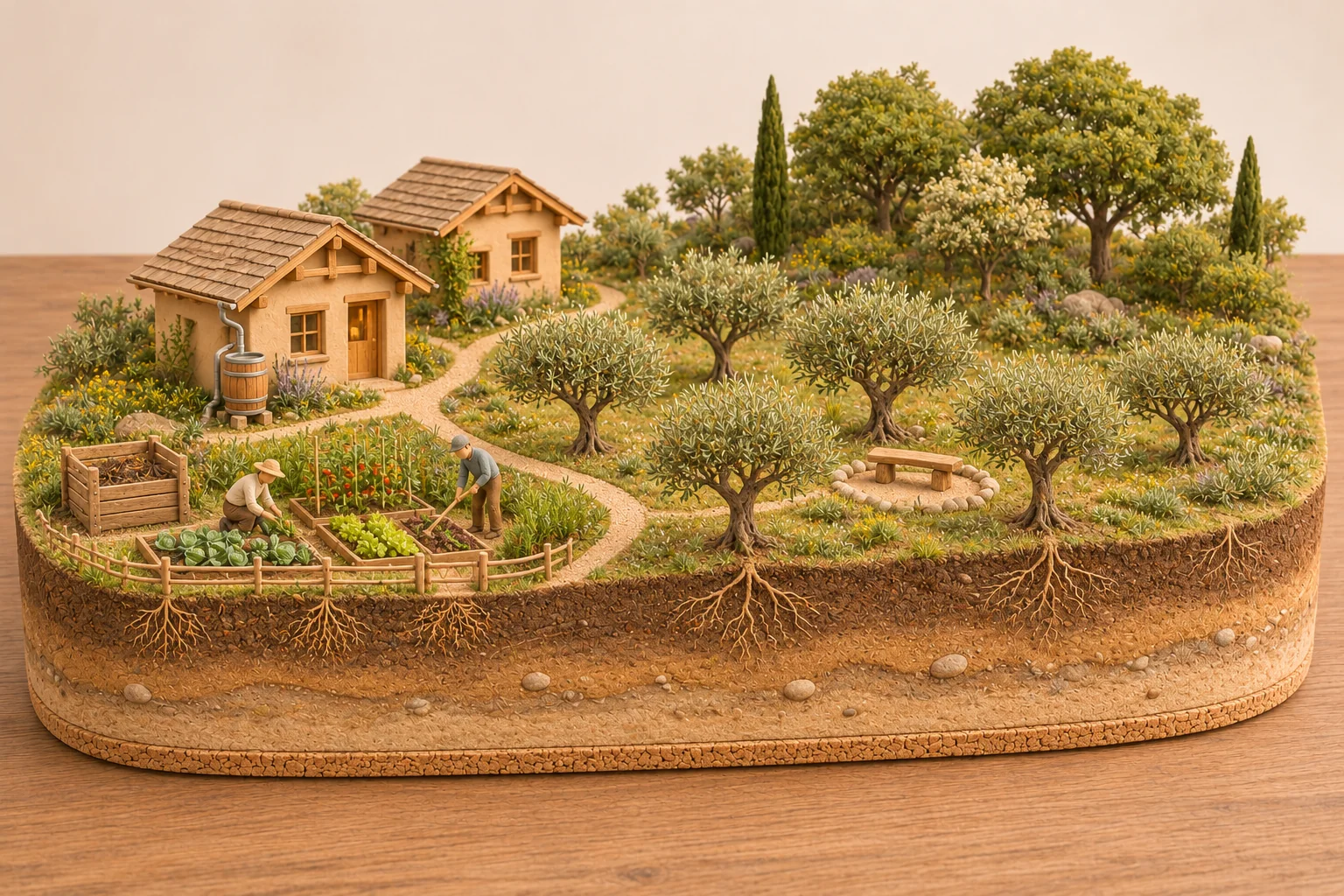
An approach to living together
The Global Ecovillage Network connects ecology with social life, culture and economic arrangements. An ecovillage considers these together when deciding how to live and care for its surroundings.
Projects can be rural or urban, newly built or part of an existing settlement. The name describes an intention; each community’s actions and agreements show how it is being put into practice.
Where the idea comes from
The word came into wide use in the 1990s, and the Global Ecovillage Network was founded in 1995 to connect projects around the world. Some of the best-known ecovillages, such as Findhorn in Scotland and Sieben Linden in Germany, have existed for decades.
Spain has long-established projects too, such as Lakabe in Navarre and Matavenero in León, alongside newer groups still looking for land. They vary widely in size, beliefs, finances and how they make decisions.
In Spain, many projects are connected through the Iberian Ecovillage Network (Red Ibérica de Ecoaldeas), which holds regular gatherings.
What daily life might involve
Shared gardens or meals can give neighbours regular reasons to meet. Looking after common places also brings practical tasks and decisions into daily life. The balance between household independence and shared activity differs from one project to another.
Some communities include meditation or other personal practices. Others have no spiritual focus. Ask about beliefs and expectations alongside the practical arrangements, so you can understand whether a place feels right for you.
Ecology in practice
An ecovillage’s plans may include growing food, collecting rainwater, composting or producing renewable energy. Sharing tools and other resources can also reduce what each household needs to own.
Ask which practices are working now and which are still planned. Growing food or restoring a landscape takes resources and sustained care, and the approach should respond to the site.
Economy and work
People may earn their living through farming, local businesses, workshops or work outside the community, including remote work. Some groups share income; others keep household finances separate and contribute to common costs.
Housing and joining arrangements vary too. Check the costs, the rights they provide and any expectations around shared work before deciding to join.
An ecovillage is not automatically off-grid
Ecological aims do not necessarily mean disconnection from public services or the wider world. Ask how energy, water, transport and food actually work, and which plans have already been put into practice.
A useful question is how a community understands its local landscape and what it is doing to care for it. Ambition matters, but so does being clear about progress and limits.
Ecovillage or cohousing?
The two overlap. Cohousing describes how a neighbourhood is designed and run; an ecovillage describes a wider set of ecological and social aims, usually with land. A cohousing group can have ecological goals, and an ecovillage can be laid out as cohousing. Our introduction to community living compares these and other forms.
Getting to know a community
A first conversation, visit or open day can help you understand the people and the place. Some communities offer longer stays or a trial period before membership. Others are still searching for land, so getting involved starts with discussions and planning.
Ask what the next step involves, what it costs and what either side is committing to. Taking time to get to know each other is useful at every stage.
Exploring a community for yourself
Start with its development stage, agreements and people. Look for clarity about private space, shared decisions, finances and what joining involves. Visit where possible, and take the time you need.
Happiness Village is one project being developed in Catalonia, with private Geoship homes, shared land and gardens, and a cooperative model. Our illustrations express a vision; we are still working towards making it a place to live. You can read where the project stands.
Come and meet us.
The Happiness Village Square is our online community. Follow project updates, join community calls and meet people in person. Ask about the plans and share what draws you to living here.
Join the Happiness Village Square ↗