Unlike regular massage techniques, holistic Ayurvedic massage therapy balances the body, mind, and energetic field. Rachel Markowitz outlines the techniques and benefits of different types of Ayurveda massage, such as abhyanga, shirodhara and udvartana.
Ayurveda, Sanskrit for “life science,” is ancient India’s traditional health system for holistic well-being, still relevant as ever. The vast field of Ayurveda includes regimens for diet and exercise, herbal supplements and medicines, cleansing practices, and various therapies.
Unlike conventional healthcare, Ayurvedic treatments depend on our unique inherent qualities, aiming to balance both natural and temporary imbalances. Because of this, Ayurvedic wellness plans are specific to each individual.
Ayurveda is all-encompassing, containing a world of principles, techniques, and terminology. However, if you’re curious about Ayurvedic healing, there’s an accessible, risk-free, and relaxing way to experiment with these time-tested customary practices: get a massage!
What is An Ayurvedic massage?
Although on the surface some types of Ayurvedic therapies appear similar to other massage techniques, the scope of Ayurvedic massage extends far beyond typical spa treatments. Whereas most modern massage techniques focus solely on relieving physical tension and promoting relaxation, Ayurvedic massage therapy incorporates a holistic view of wellness – aiming to harmonize and balance the body, mind, and energetic field.
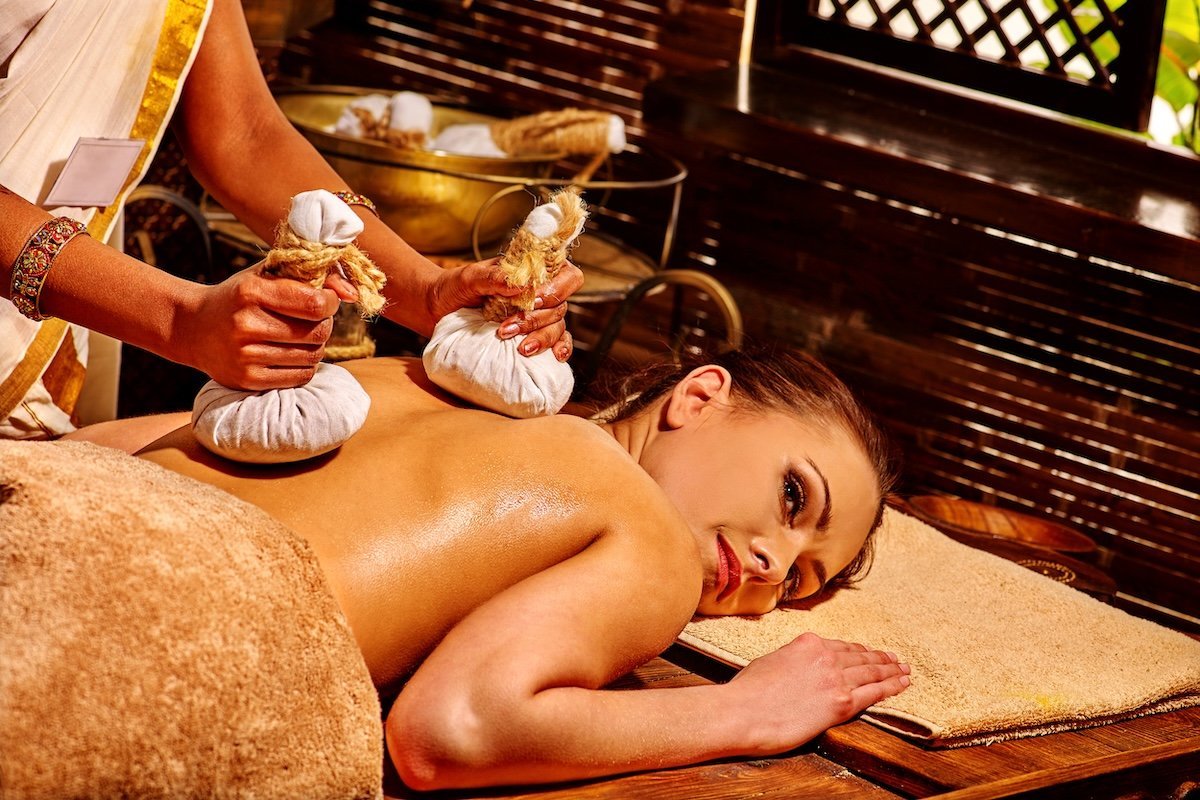
Ayurvedic massage with herbal balls
Thus, while Ayurvedic massages can certainly be used to reduce stress or improve health, they also promote overall well-being in all dimensions of life. In fact, in India, doctors often prescribe Ayurvedic massage as an integral component of medical treatments.
Types of Ayurvedic Massage
Ayurveda is based on the concept that we are composed of a combination of three distinctive energies called doshas – and that each person’s constitution is a unique balance of these energies.
A person’s natural composition, called Prakriti, and their current state of balance or imbalance, called Vikriti, both play a role in the healing methods recommended by Ayurvedic health, including massage therapy. Therefore, the following Ayurvedic therapies are typically adapted to their recipients.
1. Abhyanga
Abhyanga is a full-body Ayurvedic massage that uses warm, and often herb-infused, oils to penetrate the skin. In Abhyanga massage, a therapist will select or blend massage oils with specific medicinal properties based on an individual’s Ayurvedic constitution or healthcare needs.
Abhyanga uses gentle, consistent pressure. It increases energy flow and blood circulation throughout the body with long, rhythmic strokes, which, along with therapeutic oils, help treat the physical body while relieving stress. Although Abhyanga massage is a common spa offering, it is primarily considered a self-massage technique and part of a well-balanced daily health routine.
2. Shirodhara
Shirodhara massage is the long-established therapy of slowly pouring warm liquid onto a person’s forehead – the location of the pineal gland and, in the energetic (subtle) body, ajna chakra (also known as the third eye). According to Ayurveda, stimulating this vital point between the eyebrows affects both the nervous system and a person’s flow of life force energy.
“Ayurvedic massage therapy incorporates a holistic view of wellness – aiming to harmonize and balance the body, mind, and energetic field.”
Although it’s most common to use medicinal (herb-infused) oil for Shirodhara, this therapy can also be performed with milk, buttermilk, water, or coconut water. Like other forms of Ayurvedic massage, Shirodhara calms the mind and balances the doshas. It’s been utilized in India for thousands of years for treating insomnia, headaches, neurological disorders, and mental distress. According to the California College of Ayurveda, this treatment also invites spiritual awakening via the third eye center.
3. Udvartana
Udvartana massage utilizes herbal powders – usually dry but sometimes mixed into a paste with ghee. On the surface, the friction from these herbs, massaged in an upward direction, heats and exfoliates the skin. On an inner level, Udvartana stimulates circulation and lymphatic drainage and releases toxins from the body.
MORE LIKE THIS:
- Kundalini Meditation: 4 Key Benefits and How to Practise It
- 5 Techniques to Balance Chakras and Unblock Energy Flow
- Conscious Breathing: What is It and How Do We Benefit From It?
Udvartana is a common Ayurvedic massage therapy for weight loss and to treat obesity, high cholesterol, and diabetes. It’s also recommended to boost metabolism as part of a daily health routine. In professional treatment settings, Udvartana massage is often followed by an herbal steam bath.
4. Marma Chikitsa
Marma therapy, called marma chikitsa in Sanskrit, stimulates points of vital energy that relate to specific aspects of the physical and energetic body. These points, called marma points (or simply marmas), are similar to the acupressure points that form the foundation of Traditional Chinese Medicine. However, unlike acupressure points, marma locations are measured relative to each unique body and can differ from person to person.
Targeting marma points through touch or massage techniques releases energetic blockages, leads to overall balance, and can remedy both physical ailments and lifestyle-induced stress. Energy therapy using marma points can also be integrated into other Ayurvedic healing modalities.
Approaches to Ayurvedic Massage
Ayurveda’s distinguishing methodology includes not only its physical massage techniques, but also its use of natural ingredients and its emphasis on balance.
Massage techniques
Ayurvedic massages are typically light in pressure. Therapists trained in Ayurvedic practices use specific manual techniques, similar to other types of professional massage, including:
- Samvahan (Effleurage): Long, smooth gliding strokes, often used at the beginning of a massage to spread oil, warm muscles, and increase circulation and lymphatic flow.
- Mardan (Petrissage): Deep massage techniques, including kneading and rolling, for working on muscle tension and function.
- Tapatan (Tapotement): Rhythmic tapping or drumming on the body, either with fingers or hands, to stimulate nerve endings and circulation while promoting healthy skin.
-
Pesin (Friction): Quick movements, back and forth or in circles, to generate heat and increase blood flow and break up knots – often using the thumbs.
Use of Oil and Herbs
As mentioned earlier, Ayurvedic therapies make use of traditional plant-based medicines. Common base oils used for Ayurvedic massage include sesame, coconut, almond, castor, and mustard. These oils are often blended with medicinal herbal oil blends, known as tailams, that offer specific therapeutic benefits.
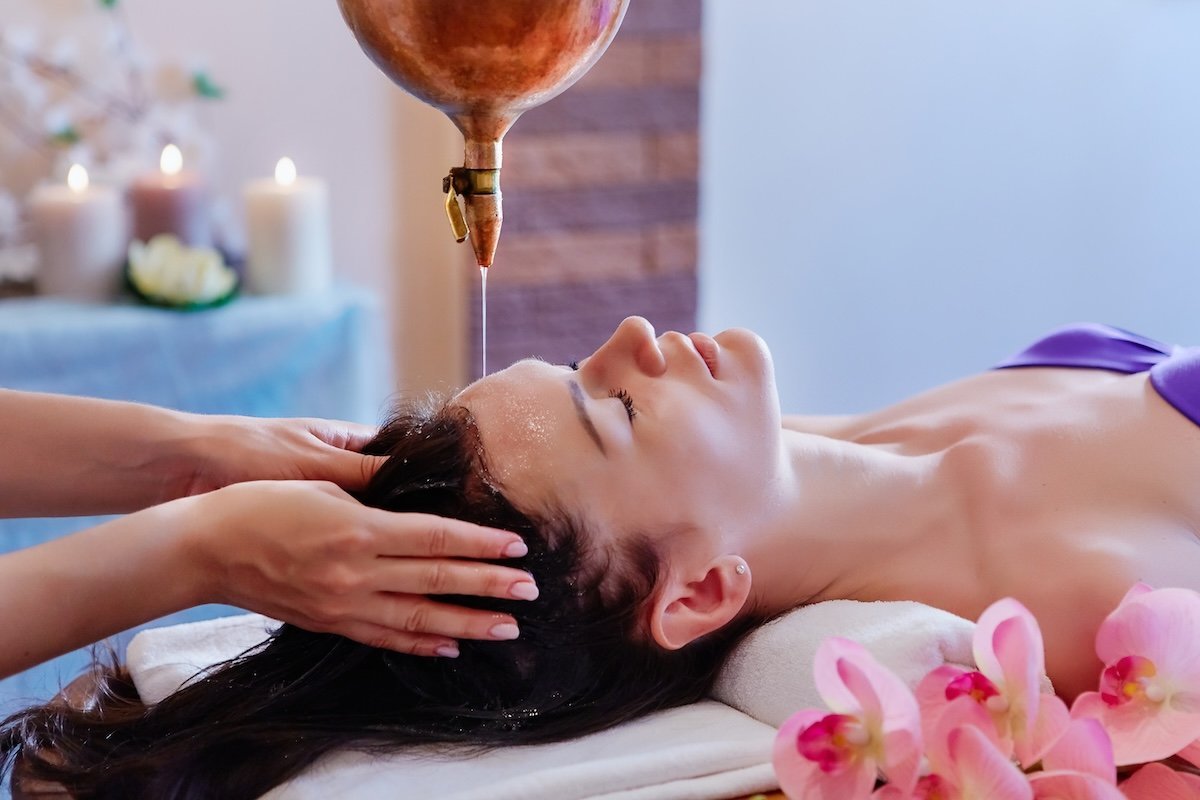 Shirodhara massage uses oil on the forehead
Emphasis on Balance
The therapies, oils, and herbs recommended for a person’s therapy depend on their Prakriti, along with their current state of balance. An qualified Ayurvedic healthcare practitioner can often identify your constitution using pulse, tongue, or eye diagnosis.
“Like other forms of Ayurvedic massage, Shirodhara calms the mind and balances the doshas. It’s been utilized in India for thousands of years for treating insomnia, headaches, neurological disorders, and mental distress.”
However, to know your unique composition and how to balance it, it’s helpful to take a test. Regardless of your constitution or health ailments, Ayurvedic massage therapy aims for health and wholeness on all levels.
Benefits of Ayurvedic Massage
Along with helping us to simply feel cared for and at ease, the holistic benefits of Ayurvedic massages include:
-
Detoxification Ayurvedic massage therapies release toxins, called ama, from the body by activating the lymphatic system through friction and using herbal medicine to penetrate the skin. According to Banyan Botanicals, massage and other Ayurvedic cleansing techniques work by drawing toxins out of body tissue and directing them towards the digestive tract.
-
Skin health Ayurvedic oils moisturize skin and are infused to provide health benefits to each person’s unique composition and treatment needs. Other techniques, such as Udvartana massage, involve exfoliation and overall skin rejuvenation. Furthermore, Ayurvedic herbs and oils can serve anti-inflammatory, anti-aging, and cosmetic purposes. However, Ayurveda sees healthy skin as the reflection of internal health and not vice versa!
-
Improved circulation Stimulating the body through touch increases both circulation and lymphatic drainage. In Ayurveda, blood circulation is closely related to overall nourishment and health, delivering oxygen, nutrients, and energy to the body.
-
Stress relief Clinical tests validate the stress-relieving qualities of Ayurvedic therapies; in fact, a 2011 study found that participants experienced less stress and a lower heart rate after just a single hour-long Abhyanga massage. Furthermore, clinical research published in the Journal of Ayurveda and Integrative Medicine found that Shirodhara massage treatments effectively induced relaxation and improved stress-related ailments.
- Balance Regardless of specific health intentions, the dosha-stabilizing effects of Ayurvedic massage lead to an awareness of how to balance the body, mind, and heart. When we begin to take steps towards holistic health, we see positive responses in all dimensions of life.
Takeaway: Ayurvedic massage
Ayurvedic massage includes traditional therapies customized for each individual, promoting physical, mental, and energetic balance. These practices use various massage techniques, oils, and herbs, and some are recommended as part of a daily routine for self-care and wellness. Ayurvedic treatments are not merely a way to retreat from daily stress, but a path for exploring our current state of health, inside and out.
Images shutterstock/ArtSvetlana, shutterstock/Poznyakov
happiness.com | The fine art of being: learn, practise, share
Are you a happiness.com member? Sign up for free to enjoy:
■ our happiness magazine with practical life tips
■ sharing and supporting others in our happiness forum
Written by Rachel Markowitz
 Rachel recently found herself over a decade deep in a worldwide wander guided by what she feels to be true. She’s been facilitating classes and workshops on yoga, meditation, self-exploration, and alternative ways of living since 2012, mostly in Latin America and Asia. These days, she spends most of her time looking at, walking around, or singing to a sacred mountain in southern India. Read more of her words at her to those who wonder blog.
YOU MAY ALSO LIKE
Forum discussions
-
Healing from trauma, learning to forgive
By Be**** , in Introduction Circle - A warm welcome to happiness!
- 2 replies
- 2,027 views
-

- Al****
-
NIGHT BY THE FIRE. Relaxing music. Healing music. Meditation music. Sleep music. Yoga and relax
By Re**** , in Mindfulness & Meditation Forum
- 0 replies
- 1,894 views
-

- Re****
-
Connection to the Creator, the Source of infinite high frequency energy
By Th**** , in Mindfulness & Meditation Forum
- 0 replies
- 2,514 views
-

- Th****
-
- 0 replies
- 2,135 views
-

- He****
-
- 3 replies
- 3,824 views
-

- Wi****
Join the conversation
You are posting as a guest. If you have an account, sign in now to post with your account.
There are no comments to display.