From cancer wards to wellness spaces, Healing Touch therapy is gaining attention for its calming, restorative effects. Rhianna Quanstrom explores how it works, what you can expect in a session, and whether the evidence supports this energy-healing practice.
Gentle and non-invasive, Healing Touch (HT) is a therapy that promotes mental, physical, emotional, and spiritual well-being. Used by nurses and other health professionals, this technique is gaining traction as an effective way to reduce patients’ pain, relieve stress, and speed up their healing process.
Considering that it hasn’t entered mainstream knowledge yet, it’s important to understand what Healing Touch therapy is as a complementary healing option. We’ll discuss what happens during a session, how it can help you, who can benefit from it, and what the science says about it.
What is Healing Touch Therapy?
Healing Touch is a form of energy healing where the practitioner helps restore balance and harmony to one’s energy field. This can be done through hands-on touch, or near-touch techniques.
Energy healing is based on the theory that illness, pain, or disease can stem from an individual's imbalanced or blocked energy field. As such, the aim is to bring an individual's energy field back into coherence through various techniques.
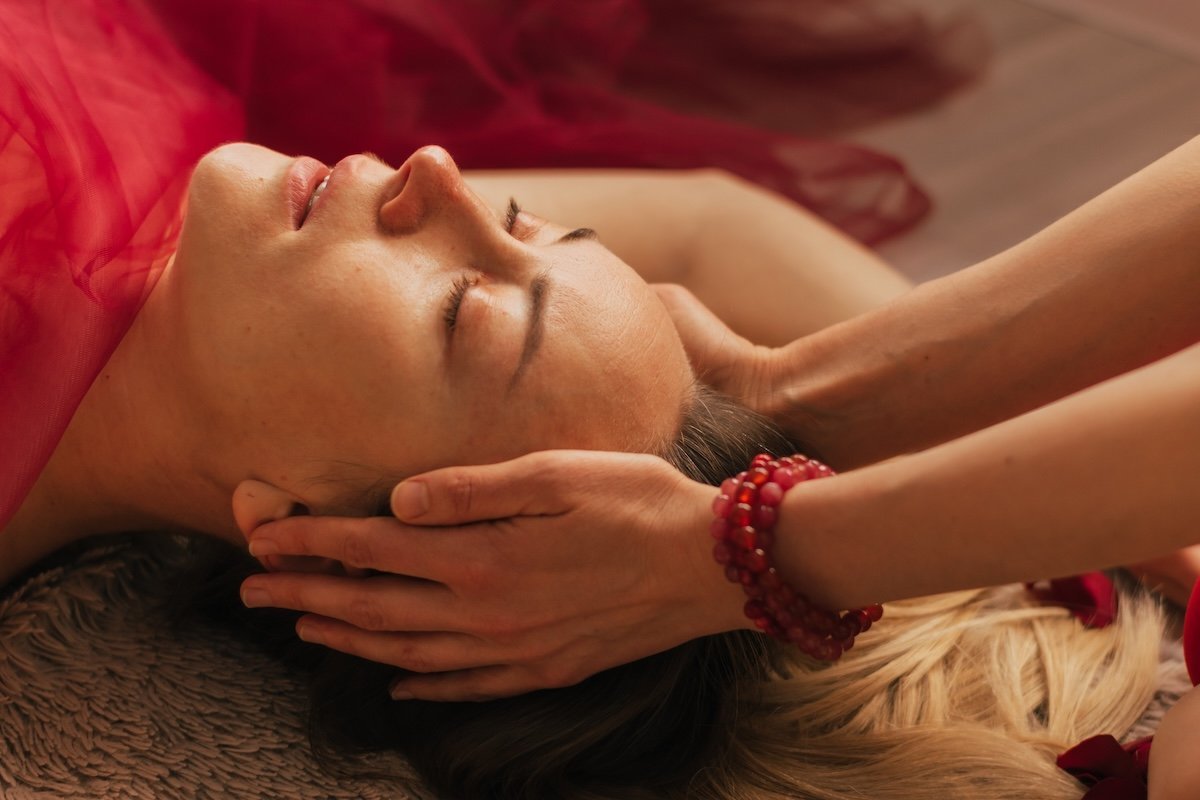
Healing Touch uses hands-on or near-touch techniques
Healing Touch therapy is sometimes referred to as healing touch massage, but it’s important to understand that Healing Touch is not a massage. When you hear the term healing touch massage, it’s most likely referring to therapeutic massage, which is a different form of therapy.
Healing Touch is a modern continuation of ancient energy healing practices such as Reiki, acupuncture, and qigong. It was officially developed in 1989 by registered nurse Janet Mentgen, who wanted to align energy healing techniques with the modern medical profession.
RELATED:
- 14 Different Types of Reiki: Which is Best For Me?
- How to Protect Your Energy: 7 Science-Backed Techniques
- Ayuverdic Massage Therapy: Techniques and Benefits
As such, Healing Touch is often taught to nurses, other health professionals, and alternative health care providers as an addition to their practice. Healing Touch programs include a scope of practice, code of ethics, and a core curriculum taught by certified instructors, so that everyone learns the same techniques and practices.
What Happens During Healing Touch Therapy?
Healing Touch is sometimes offered at hospitals during inpatient and outpatient stays as a complementary support. You can also seek out practitioners for individual sessions. In most settings, Healing Touch is administered while the patient is laying down on a bed or massage table, but it can also be received while seated.
In a hospital setting, nurses will look at their patients’ charts to understand what they’re receiving care for. In an individual session, it’s common to fill out an intake sheet and discuss with the practitioner why you’re seeking Healing Touch therapy. Each session can range from 15 minutes to an hour.
“Gentle and non-invasive, Healing Touch (HT) is a therapy that promotes mental, physical, emotional, and spiritual well-being.”
Before the session starts, the practitioner centers and focuses themselves in their heart space. They release all other distractions and state a clear intention for the session. The intention is to provide healing to the person in need.
Once they are focused and centered, the practitioner begins to read your energy field with their hands and intuition. They may wave their hands over you or touch your body in specific places, such as your feet, head, shoulders, or hands. Again, it is not a massage, which can be confusing when hearing the term “healing touch massage.” Rather, the touch is simply light pressure on specific points on the body.
RELATED: Spiritual Cleansing: 9 Detox and Purification Techniques
After assessing your energy field, they will use either the Chakras Technique or the Magnetic Passes technique to bring your energy back into coherence:
-
Chakras Technique The chakra technique is about restoring the seven energy centers of the body (known as the chakra system in Eastern philosophy). In this technique, the practitioner will use touch, starting at the feet, to restore balance.
- Magnetic Passes In the Magnetic Passes technique, the practitioner does not touch the patient. Instead, they brush or comb the energy surrounding the person to help work out any blocks or stagnant points. Once finished, the Healing Touch therapist will help you ground and center yourself before ending the session.
How Can Healing Touch Therapy Help You?
Healing Touch therapy can benefit anyone dealing with stress, overwhelm, chronic pain, fatigue, anxiety, depression, or grief. It is highly supportive for people after surgery or those receiving any sort of ongoing medical treatment, including chemotherapy. Healing Touch can also benefit anyone seeking spiritual or emotional healing.
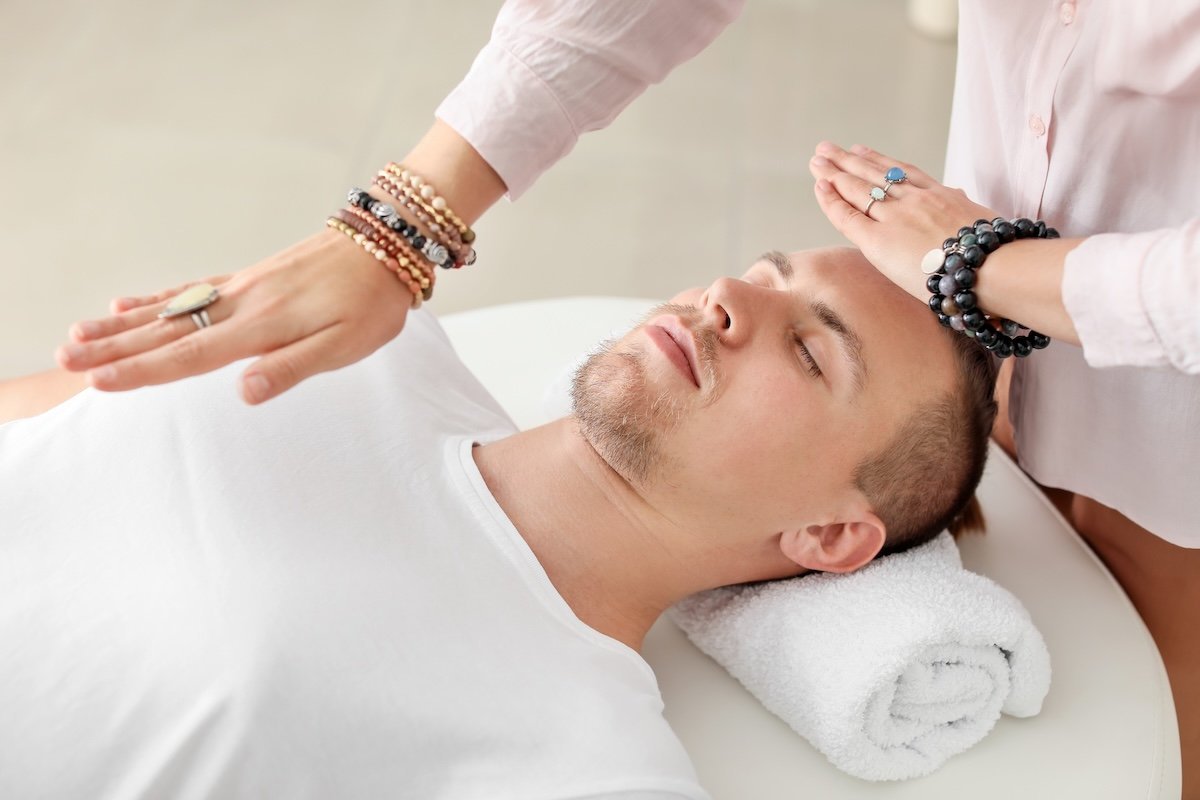
Healing Touch is often used in clinical settings and post-surgery
One of the greatest benefits of Healing Touch therapy is its ability to reduce pain and promote peace and relaxation. A study published by the Journal of Alternative and Complementary Medicine showed that Healing Touch significantly reduced pain in cancer patients after a single session. Another study published by the Journal of Religion and Health found that Healing Touch reduced anxiety and improved the comfort level of nursing home residents.
“One of the greatest benefits of Healing Touch therapy is its ability to reduce pain and promote peace and relaxation.”
Considering these findings, Healing Touch may be a safe and gentle therapy for improving overall well-being. However, the research is still lacking in terms of the broader legitimacy of Healing Touch therapy.
So, Does Healing Touch Actually Work?
While healing touch massage, more commonly known as massage therapy, has research-backed benefits, the research on Healing Touch therapy is less conclusive. A rapid evidence assessment of recent therapeutic touch research conducted by the University of British Columbia’s School of Nursing concluded:
“Given the mixed results, lack of replication, overall research quality, and significant issues of bias identified, there currently exists no good quality evidence that supports the implementation of TT [Healing Touch therapy] as an evidence‐based clinical intervention in any context.”
RELATED:
- What is Chi? A Guide to Feeling and Healing Life Force Energy
- 5 Techniques to Balance Chakras and Unblock Energy Flow
- Discover the Benefits of Marma Massage Therapy
According to this report, there are not enough credible or high-quality scientific studies that show whether or not Healing Touch actually works. As such, the jury is still out. We’ll have to wait for further research to better understand the effects of Healing Touch therapy.
FAQs
What Is Healing Touch Therapy?
Healing touch is a gentle, energy-based practice where practitioners use light touch or hands-above-the-body techniques to support balance and relaxation in your energy field.
Does Healing Touch Really Work?
Many people report reduced stress, better sleep, and emotional calm; scientific evidence is mixed, but early studies suggest potential benefits for anxiety and pain relief.
Is Healing Touch the Same as Reiki?
They’re similar energy-healing modalities, but healing touch follows a structured, nurse-developed curriculum with specific techniques and levels of training.
Is Healing Touch Safe?
Yes — it’s considered low-risk and non-invasive, and can be used alongside conventional medical care for added comfort and emotional support.
How Many Sessions Do I Need?
Some feel a shift after one session of Healing Touch therapy, but a short series of appointments often offers deeper relaxation and longer-lasting benefits.
How Much Does Healing Touch Therapy Cost?
In the U.S., many practitioners charge between US $40 and US $90 for a one-hour private session. In Europe similar energy-healing sessions often run around €30–€60 per session.
Takeaway: Healing Touch
Healing Touch therapy is gaining traction among nurses and alternative health practitioners as a gentle way to decrease patients’ pain and improve their comfort levels. As an energy healing modality, it focuses on harmonizing one’s energy field through specific hand techniques and practices.
While there are several scientific reports supporting the positive effects of healing touch, there is also evidence that these reports may not be fully credible. Whether it’s the placebo effect or science hasn’t caught up to assessing and understanding the human biofield, it’s clear there is some benefit to Healing Touch as a safe, gentle, and non-invasive therapy.
Images shutterstock/Pixel-Shot, shutterstock/Natali Ximich
happiness.com | The fine art of being: learn, practise, share
Are you a happiness.com member yet? Sign up for free now to:
■ enjoy our happiness magazine with practical life tips
■ share and support in our happiness forum
Written by Rhianna Quanstrom
 Rhianna Quanstrom is a freelance writer, herbalist, and spiritual seeker with a passion for nature-based healing and sacred wisdom. Her writing draws from years of experience with meditation, shamanic practices, plant medicine, dream work, and the reclamation of the Sacred Feminine. Discover more of her writing and poetry on her Mystic Love Substack.
YOU MAY ALSO LIKE
Forum discussions
-
- 0 replies
- 1,623 views
-

- Am****
-
- 2 replies
- 2,023 views
-
- jo****
-
How I Deal with depression, anxiety, or other mental health challenges: My Journey
By Po**** , in Mental Health Forum
- 11 replies
- 3,325 views
-
- Mi****
-
BPD, Depression & Anxiety whatever you have I’ll be here to lend a helping hand or a shoulder I don’t judge
By ki**** , in Mental Health Forum
- 3 replies
- 2,929 views
-

- Fu****
-
- 5 replies
- 10,021 views
-

- Ho****
Join the conversation
You are posting as a guest. If you have an account, sign in now to post with your account.
There are no comments to display.