Although there is currently limited scientific evidence about its efficacy, Reiki has become an increasingly popular hands-on energy medicine practice. Rachel Markowitz explores Reiki principles, the benefits and costs of treatment, and how to become a practitioner.
I learned about Reiki and experienced my first healing session in 2012 from a dreadlocked European traveler who wanted some practice. During the treatment, I focused intently on trying to feel energetic sensations but was continually distracted by discomfort in my left arm. It felt like the surface below me was tilted, that my elbow was compensating for the slanted massage table, and that my misaligned body was ruining my Reiki experience. However, I eventually relaxed, forgot about my arm, and finished the session feeling surprisingly refreshed.
When I asked my newly initiated healer if he had noticed anything about my body, he told me that he perceived an energetic blockage in my left elbow but felt like he had released it. Convinced of Reiki’s healing power and curious to learn more, I sought out my first Reiki teacher shortly thereafter and have been experimenting with energy healing techniques ever since.
Throughout the years, I’ve found Reiki to be a simple, straightforward energy therapy that anyone can experience or experiment with.
What is Reiki?
The word Reiki is a combination of two Japanese characters, or kanji: rei, symbolizing the universe, and ki, representing life energy. However, Reiki refers not only to the concept of life force energy (called prana or chi by other traditions), but also to the practice of using this energy for healing purposes.
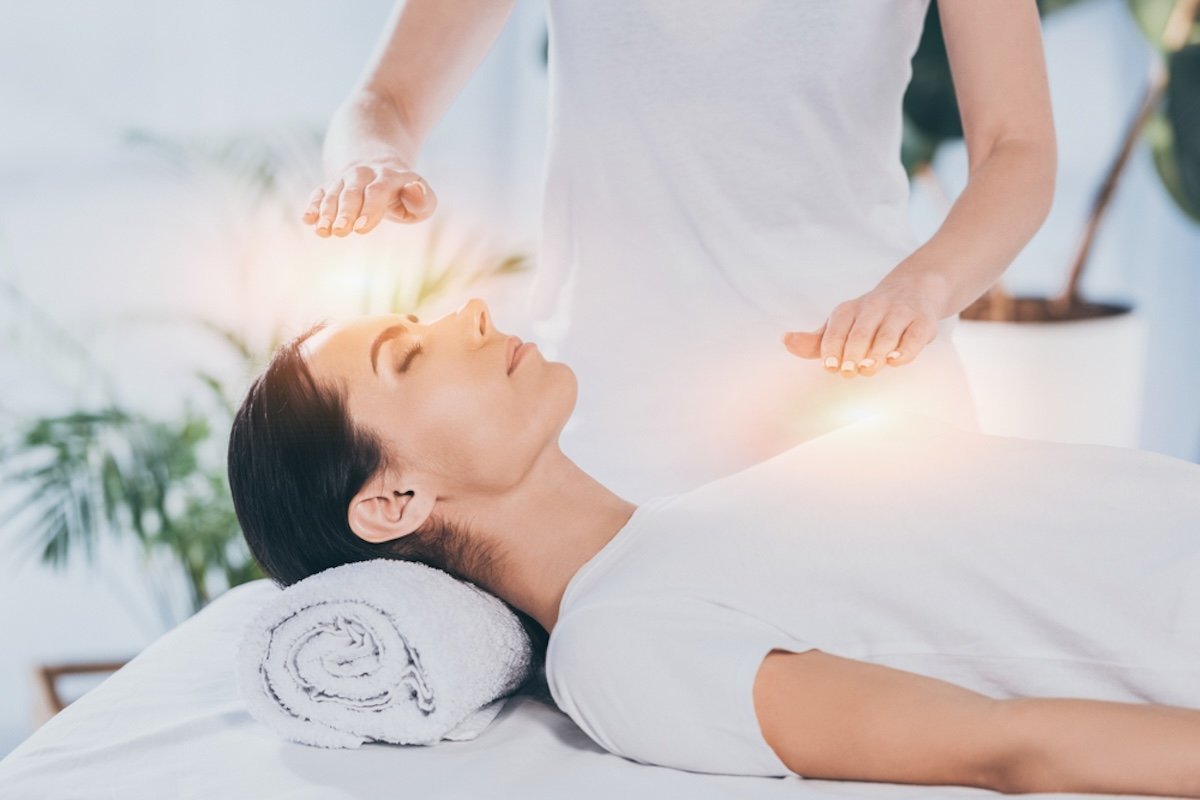
Healing with hands: a typical Reiki session
Connecting with Reiki energy, either on our own or through a Reiki healer, promotes the body’s natural, energetically-balanced state. Though Reiki is a common hands-based energy medicine practice around the world, it was traditionally developed to connect to universal source energy for the purpose of spiritual growth and self-healing.
A Brief History of Reiki
Reiki dates back to the early 1900s as a documented concept in Japan, and its corresponding healing practice is often accredited to Mikao Usui, who received a spontaneous transmission of Reiki energy during a mystical healing experience in 1922.
Usui’s system of Reiki healing, which he called Usui Reiki Ryoho, is the direct lineage that spread throughout the world and popularized Reiki. However, though most modern-day Reiki practices stem from Usui’s teachings, Reiki healing was actually developed, named, and written about in Japan several years before Usui’s discovery.
Since its journey to the West in the 1930s, many healers have channeled or developed adaptations and additions to traditional Reiki practices, resulting in what we often classify as “Western Reiki.” There are now a multitude of styles and types of Reiki that can be practised.
What are the Reiki Principles?
Along with Reiki healing methods, Usui developed a system of five principles (gokai) that give Reiki a moral and spiritual foundation. These principles, also known as “precepts” or “admonitions,” are guidelines that a Reiki practitioner recites at the beginning and end of each day, and before healing sessions. Each Reiki principle begins with “just for today,” giving the practitioner both a manageable obligation and the incentive to repeat the precepts regularly.
The Reiki principles are:
- Just for today, do not anger.
- Just for today, do not worry.
- Just for today, be grateful.
- Just for today, be humble (also interpreted as “work honestly”)
- Just for today, be kind/compassionate towards others and myself.
The Reiki principles, when practiced faithfully, benefit the holistic wellness of a Reiki practitioner even without a hands-on healing practice. According to Usui, authentically contemplating and abiding by these principles is a spiritual medicine that leads to health and happiness.
What Happens During a Reiki Session?
In a Reiki session, a healer (someone connected to a direct lineage of Reiki energy, by means of a formal initiation process) channels Reiki energy to another being through their hands. This works because the healer becomes a conduit of life force energy, enabling a patient to receive and distribute it in an optimal way.
“Reiki is a well-established energy medicine practice that enhances a person’s natural ability to heal. A Reiki practitioner offers hands-on healing to clients.”
Reiki sessions typically last 30 to 75 minutes. They usually consist of a pre-session consultation, hands-on healing treatment, and post-session discussion. For those new to Reiki, a healer will provide background information, give an overview of what to expect during the session, and allow time for questions.
During a treatment, the patient lies down on a cushioned surface, fully clothed, with closed eyes. While the patient relaxes, the healer lightly places their hands in specific positions on the patient’s body. They may also use various healing techniques, including:
-
Energy Clearing – A Reiki healer begins a session by cleansing their energetic field and the healing space, either before the client arrives or once their eyes are closed. This process involves using Reiki techniques, and perhaps incense, tools, or personal practices to clear and release unwanted energy from a space or person.
-
Invoking – Depending on a Reiki healer’s lineage, they will recite the Reiki principles mentally and perhaps invoke the energy of spiritual guides, ascended masters, or other beings to help with the healing process. The healer may also voice an intention for the session.
-
Scanning – To begin a Reiki session, a healer typically guides their hands over a patient’s body from head to toe, without direct hands-on contact. During this process, the practitioner scans for energetic blockages, places where energy needs balancing, or any other noticeable energetic or intuitive sensations about their patient’s healing needs. This technique, known as Byosen Scanning, helps a healer know where to place their hands during treatment.
-
Symbols and Kotodama – The use of Reiki symbols and the “spirit” of their names (kotodama) are part of a healer’s training and are often employed during treatments. According to traditional teachings, these symbols and their usage should be kept secretively.
-
Beaming – In Western Reiki, “beaming” refers to a particular technique for healing from a short distance. Using this practice, a healer can beam energy to a client several meters away using their hands or eyes, along with intention.
-
Infusing – A healer who practices a modern-day form of Reiki might infuse objects (such as crystals, candles, jewelry, food, water, or oils) with Reiki to charge them with healing energy. “Reiki-infused” can also describe a space, event, or work of art that is intentionally filled with energy and sealed.
- Meditation – A Reiki practitioner might begin or end a session with a short meditation or several minutes of silence. They may also invite a patient to set an intention or self-reflect to integrate a session’s benefits.
Benefits of Reiki
One unique quality of Reiki healing is that it involves minimal work on the part of the practitioner; Reiki energy knows where to flow in order for a recipient’s body to heal naturally. Accordingly, the benefits of Reiki healing extend to physical, emotional, and spiritual well-being, as well as overall relaxation. Although it’s unlikely that the patient will feel the exact process going on during their session, it’s typical that a Reiki treatment leaves a person with a sense of calm and inner peace.
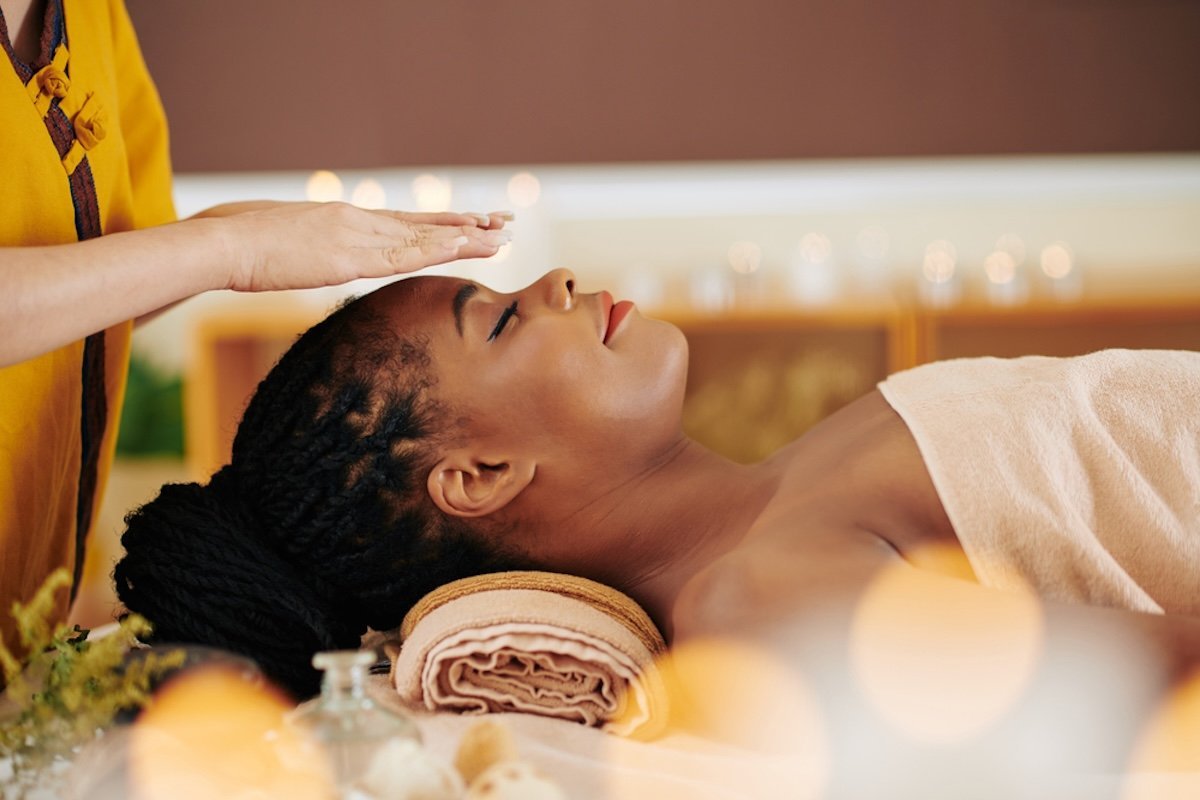
Reiki involves the channeling of energy to another person
Because of its widespread reach, Reiki is becoming a well-known complementary medicine in hospitals and health clinics – with practitioners offering relief and relaxation to cancer patients, children, and others experiencing pain, anxiety, and stress.
This list of research findings, published by the International Center for Reiki Training (ICRT), references many of the suggested healing benefits of Reiki. Furthermore, Dr. Ann Baldwin’s book, Reiki in Clinical Practice: A Science-Based Guide, outlines the physical and psychological benefits of Reiki throughout medical studies and public research, through the time of its publication in 2020.
What Are the Risks of Reiki?
Reiki is generally considered safe. A Reiki practitioner who follows the five principles of Reiki imparts no real risks during treatments, and there are no reported contraindications of Reiki healing. In fact, according to William Lee Rand, founder of the International Center for Reiki Training, one of Reiki’s defining characteristics is that it can do no harm.
MORE LIKE THIS:
- 5 Techniques to Unblock Chakras and Energy Flows
- 7 Ways Spiritual Coaching Can Transform Your Life
-
The 7 Chakras: Locations, Colors, and Use Within Yoga
With this in mind, people experimenting with Reiki or any other natural healing method might experience what is known as a healing crisis – a stirring up and releasing of toxins or impurities in the body or mind that could manifest as negative side effects of a treatment. To mitigate the risk of a healing crisis, it’s helpful to move through healing sessions slowly and intentionally, listen to the body, and maintain consistent eating, sleeping, and exercise habits.
How Much Does a Reiki Session Cost?
The cost of a professional Reiki session varies widely, depending on the length of the session, treatment setting, and healer’s experience. In the USA and UK, a private Reiki session at a wellness-related establishment or hospital ranges from $30 to 100 USD, with an average cost of $60 to 70 USD per hour.
However, some Reiki healers offer sessions for much less. Depending on where you live, you might even find Reiki healing for free, as an exchange, or by donation. Furthermore, those with limited financial resources could consider seeking out new practitioners, Reiki groups, or healing sessions through religious or spiritual communities.
“The Reiki principles, when practiced faithfully, benefit the holistic wellness of a Reiki practitioner even without a hands-on healing practice.”
Reiki sessions are not typically covered by health insurance, although some medical facilities may include Reiki as a free treatment alongside conventional practice. The best way to find a legitimate Reiki healer within your budget is by recommendation, personal research, or through a feeling of connection to a specific lineage or person.
How to Become a Reiki Healer or Master
A person becomes a Reiki healer through formal initiations, called attunements, from a certified Reiki Master/Teacher. These days, most lineages of Reiki require one attunement for each of three levels (Shoden – Level 1, Okuden – Level 2, and Shinpiden – Master/Teacher). Reiki attunements not only include an energetic transmission of Reiki energy from Master to student, but also teachings, symbols, mantras, hand positions, meditations, and practical healing procedures that correspond to each level.
Therefore, a Reiki Master refers to anyone attuned to Reiki at the Master level – though different traditions of Reiki have respective guidelines or prerequisites for moving from one level to the next. Although some lineages of Reiki will attune students to all three levels in one or two short courses, most would suggest or require new healers to move through each attunement separately, taking time for self-practice between each level. Furthermore, many schools of Reiki require certain levels of experience before an initial attunement or to work professionally as a healer in that lineage.
If you’re curious about practicing Reiki on your own, the first step is to find a Reiki Master, healer, or teacher of a tradition that you resonate with and inquire about attunement dates and requirements.
Takeaway: What is Reiki?
Reiki is a well-established energy medicine practice that enhances a person’s natural ability to heal. A Reiki practitioner offers hands-on healing to clients, and Reiki is also helpful for self-healing and healing from a distance.
Like other methods of energy therapy, Reiki is a minimal-risk therapy for improving physical ailments, promoting emotional and mental well-being, and enhancing our connection to life force energy and the spiritual path. We can all awaken the ability to channel Reiki energy and heal with our hands through a direct transmission from a Reiki Master. ●
Images shutterstock/Dragon Images, shutterstock/LightField Studios
happiness.com | The fine art of being: learn, practise, share
Are you a happiness.com member? Sign up for free to enjoy:
■ our happiness magazine with practical life tips
■ sharing and supporting others in our happiness forum
Written by Rachel Markowitz
 Rachel recently found herself over a decade deep in a worldwide wander guided by what she feels to be true. She’s been facilitating classes and workshops on yoga, meditation, self-exploration, and alternative ways of living since 2012, mostly in Latin America and Asia. These days, she spends most of her time looking at, walking around, or singing to a sacred mountain in southern India. Read more of her words at her to those who wonder blog.
YOU MAY ALSO LIKE
Forum discussions
-
Healing from trauma, learning to forgive
By Be**** , in Introduction Circle - A warm welcome to happiness!
- 2 replies
- 2,182 views
-

- Al****
-
NIGHT BY THE FIRE. Relaxing music. Healing music. Meditation music. Sleep music. Yoga and relax
By Re**** , in Mindfulness & Meditation Forum
- 0 replies
- 1,977 views
-

- Re****
-
Expert, Spiritual LOA, REIKI COACH
By Lo**** , in Introduction Circle - A warm welcome to happiness!
- 1 reply
- 1,974 views
-

- Ma****
-
Exploring Alternative Health; Meditation & Hypnosis
By Guest User, in Introduction Circle - A warm welcome to happiness!
- 4 replies
- 2,516 views
-

- Guest User
-
- 1 reply
- 2,542 views
-

- Li****
Join the conversation
You are posting as a guest. If you have an account, sign in now to post with your account.
There are no comments to display.