Increasing numbers of younger generations are turning to astrology for guidance, support, and to find meaning. What's fueling this trend? And are horoscopes real or is astrology merely a pseudoscience? Rhianna Quanstrom investigates.
Until recently, humans have been intimately connected to the night sky and the movement of the stars. These celestial bodies were pivotal to human life on Earth, helping humans keep track of the seasons, as well as planting and harvesting times.
As humans kept track of the planets and constellations over thousands of years, they started noticing patterns. Not only did this lead to the birth of astrology and astronomy, but also to mathematics and meticulous record-keeping.
For instance, one of the earliest and most scientifically valuable long-term datasets in history is the Babylonian Astronomical Diaries. These clay tablets recorded astronomical observations along with what was happening on Earth for around 700 years, from approximately 650 to 60 BCE. As such, ancient Babylon is considered the birthplace of astrology.
Astrology has been present in cultures worldwide for thousands of years, from ancient India and the Mediterranean to South America and the Mayan civilization. Remarkably, it has continued to evolve and is still widely used today.
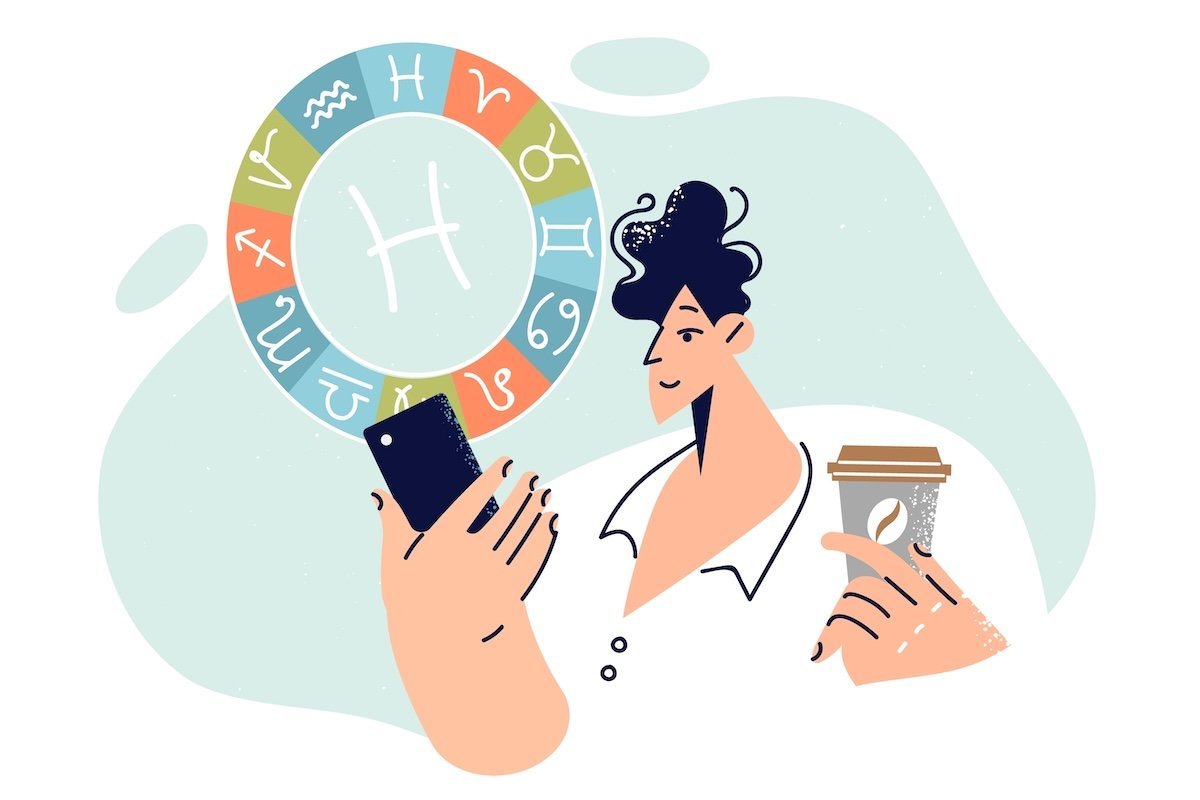
Astrology and horoscopes are growing in popularity thanks to social media
Astrology’s ancient legacy is a testament to its efficacy, but what exactly makes it so captivating? And why do we continue to turn to it as a reliable source of information time and time again? We’ll address these questions, among others, so you can learn more about the fascinating meaning of astrology and why it has captured the attention of society for millennia.
Why is Astrology so Important for Some People?
With the rise in astrology content on social media channels, it makes one wonder why there seems to be an renewed interest in the topic. For instance, as of January 2025, there were over 4.5 million videos tagged “astrology” on TikTok. Social media could be seen as leading an astrology popularity surge among Gen Z (ages 13–28) communities in particular.
Jessica Eastwood, Teaching Fellow in Philosophy at Oxford Brookes University, offers an explanation: “Although we live in an era of hyperconnectivity, many young people feel increasingly disconnected — from faith, tradition, and even personal relationships. Organised religion has historically provided a sense of belonging and ultimate purpose. But as religious affiliation declines, Gen Z is looking elsewhere for guidance and identity.
“Astrology offers an alternative, post-traditional, and post-religious sense of meaning. It provides a way to engage with something beyond the material world while remaining flexible and personal. Unlike religious doctrine, astrology allows people to explore the concept of spirituality without rigid institutional structures.”
There has also been an increase in the astrology market, as well as the use of astrology-related apps and products. In fact, astrology has grown so popular it's estimated to be a $3bn online industry – with that figure predicted to triple over the next five years.
Despite these trends, a 2024 Pew Research Center survey found that only 27 percent of U.S. adults believe in astrology. This is consistent with another poll that found between 23 and 28 percent of Americans believed in astrology from 1990 to 2005.
“Astrology has grown so popular it's estimated to be a $3bn online industry – with that figure predicted to triple over the next five years.”
Based on these statistics, use and belief in astrology don’t appear to have grown. Nevertheless, it does seem more mainstream and relevant than pre-pandemic times – and living through a pandemic may even be one of the reasons why people are increasingly curious about astrology.
This seemingly increased interest in astrology may reflect a growing desire to find meaning in the world and in ourselves. In our modern age, astrology is most often used as a psychological tool for understanding who we are. It shows us our strengths, weaknesses, and even our life purpose. We can glean this information by studying our birth chart, or horoscope.
The birth chart is a snapshot of the cosmos at the time of our birth, showing where each constellation and planet was at that precise moment. It’s believed that the astrological energy of that particular moment is imprinted on our lives and shapes who we are.
RELATED:
- Stargazing: Replace Your Worries With Wonder
- Outdoor Meditation: How to Meditate in Nature
- How to Find Meaning in Life: 7 Strategies
Along with helping us understand more about our personality, astrology can also offer insight into events to come. It doesn’t specifically describe what the future holds, but rather points to possible outcomes or dynamics.
We can look to current planetary movements and draw connections between their symbolism and world events. This can help us to make sense of what’s occurring and suggest that, perhaps, there is a greater meaning to what is happening.
So, What is Astrology Exactly?
Astrology is the study of the constellations and planets and how they affect our lives. There are many different astrological systems, and they each have their own way of interpreting the horoscope. In Western society, we use the tropical zodiac, which is rooted in the ancient Greek-Egyptian astrological tradition.
Even though Sun signs – our zodiac sign – dominate pop culture and often reduce horoscopes to superficial fluff, astrology is, in fact, a complex art and science. We are not just our Sun sign; in fact, every birth chart contains all 12 signs and all nine planets (as well as dwarf planets and asteroids).
| Astrology: Quick Facts | |
|---|---|
|
Origins |
Ancient Babylon, over 2,000 years ago |
|
Purpose |
Self-understanding, meaning-making, psychological insight |
|
Core Tool |
The birth chart (or 'natal' chart) |
|
Zodiac System Used In The West |
Tropical zodiac |
|
Scientific Status |
Evidence remains inconclusive |
|
Modern Use |
Personal growth, reflection, and emotional awareness |
The horoscope is divided into 12 houses, each containing a zodiac sign. Each house holds a particular meaning and represents a specific area of life. Chart interpretation involves studying the placement of the planets, the sign and house they fall into, and how the planets interact with each other through geometric angles.
There are many layers of meaning within a chart, and each planet or constellation holds deep symbolism drawn from the ancient mythology it was born out of. We can draw connections to these meanings and see how they show up in our personal lives.
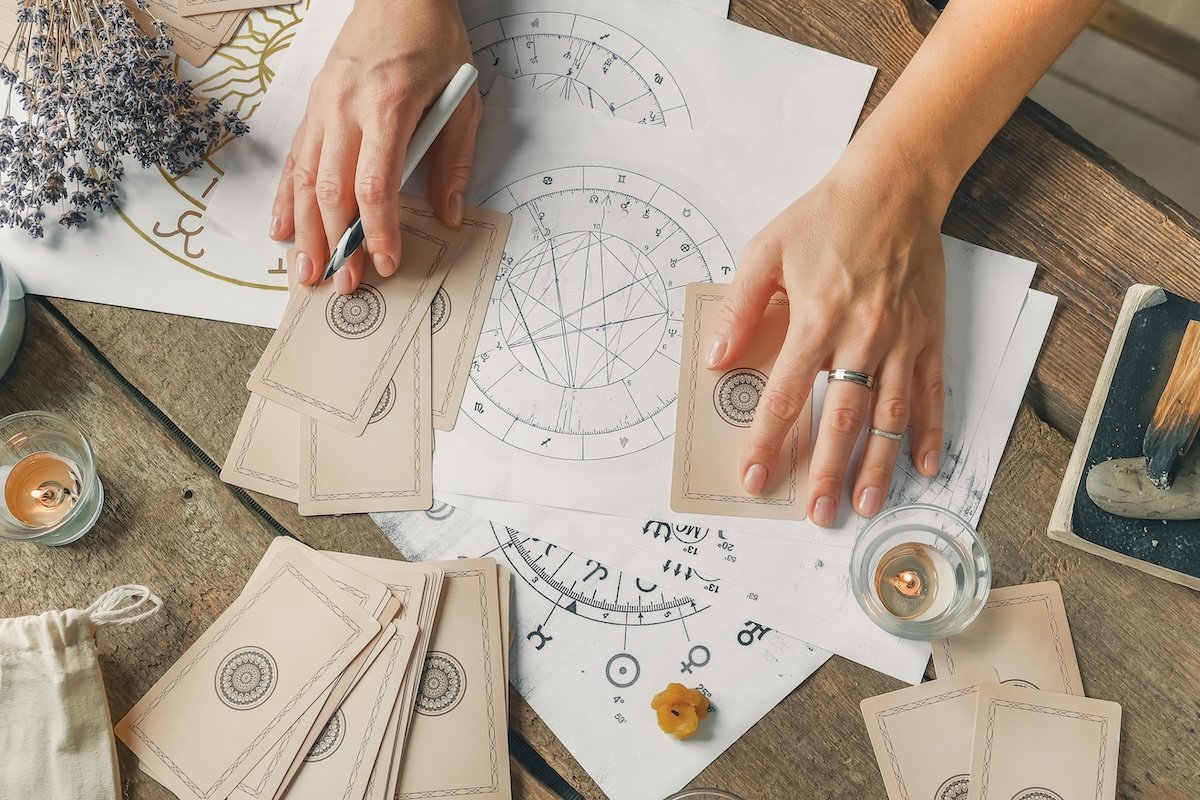
Our birth chart is a snapshot of the cosmos at the time of our birth
While we do not scientifically understand how astrology works, there are some theories as to how and why it affects our lives. One theory is that the planets emanate some sort of magnetic force or energy field. The Moon and Sun have clear effects on the Earth, and there is a belief that they (and the other planets) also affect us physically, energetically, emotionally, and spiritually.
RELATED: Lunar Living – Harnessing the Power of the Moon
Another idea is related to the Jungian theory of archetypal symbols in the collective unconscious. According to the book Mythic Astrology by Ariel Guttman and Kenneth Johnson:
“...their influence [Astrological factors] upon us is based as much upon symbolic reality as it is upon any astrophysical force. Jung believed that symbolic or archetypal realities interact with the events of our everyday lives through a process called synchronicity. He described this as “an acausal connecting principle,” meaning a process which links two factors (the cosmic symbol and the worldly event) without any apparent or physical cause for that link. The union between reality and symbol takes place on an internal, psychological level, and the unconscious is the active agent which shapes the union.”
Astronomy vs. Astrology
For much of human history, astronomy and astrology were one and the same. It is only in the past century or so that they have become separate disciplines.
Astronomy is a natural science that studies the planets, our solar system, and outer space. It focuses on the physical laws of the universe. Its goal is to produce factual, evidence-based data on the planets, their movements, and other celestial phenomena.
Astrology, on the other hand, is a symbolic and interpretive study of how the planets and celestial cycles affect human experience. It focuses on the archetypal reality of the universe and how these patterns show up in our psychology and the world at large. The goal of astrology is to provide meaning, insight, and direction in our lives.
“In our modern age, astrology is most often used as a tool for understanding who we are. It shows us our strengths, weaknesses, and even our life purpose.”
In truth, astrology is inseparable from astronomy, as astrologers rely on astronomers to track the positions of the planets and other celestial phenomena. Astrology then adds symbolic meaning to the observed data. It is also noteworthy that astronomers continue the age-old tradition of naming newly discovered dwarf planets and asteroids after ancient mythological characters, thus maintaining the symbolic resonance between the planets and human psychology.
Written in the stars? Astrology can point to possible outcomes in life
So, Is Astrology Real? Here’s What Science Says
There is undoubtedly prejudice and bias against astrology in the scientific world. There is such a strong belief that it is a pseudoscience that it can be difficult to find objective, unbiased research on the matter.
One of the most famous and repeatedly cited critiques of astrology is the “Carlson Test.” The findings of this study suggest that astrology is no more than chance, and its results have been widely held as evidence that astrology isn’t “real.”
MORE LIKE THIS:
- What's the Point of Life? The 3 Questions You Must Ask Yourself
- Ikigai: What Is It and How to Find It
- 'I Hate My Job!' Cultivate These 6 Traits and Love Your Work
To quote another blog on the topic of whether astrology is real or not (to illustrate this strong negative bias): “But is there any science to back up whether astrology impacts our personality and our lives? Here’s the short Answer [sic]: No. None whatsoever.” This author then goes on to use the Carlson Test to justify this sweeping conclusion.
There is also science that explores whether astrology impacts our personality and our lives. For instance, French researchers Michel and Françoise Gauquelin spent years analyzing the charts of professional public figures to see if there were any correlations between planetary positions and life outcomes.
“Perhaps the question of whether astrology is real or not isn’t the question we should be asking. Rather, we should be asking, “Does this add value to my life?”
They concluded that the rising and culmination of the planets play a major role in identifying character traits that could lead someone to eventually follow a particular career path (Guttman & Johnson, 1996). For example, they found a correlation between the placement of Jupiter and notable military men, and the placement of Mars among athletes, scientists, and physicians.
Furthermore, a report entitled U-turn in Carlson’s Astrology Test, by Robert Currey, directly argues against the famous Carlson Test, revealing that its findings are not conclusive enough to determine that astrology is no better than chance.
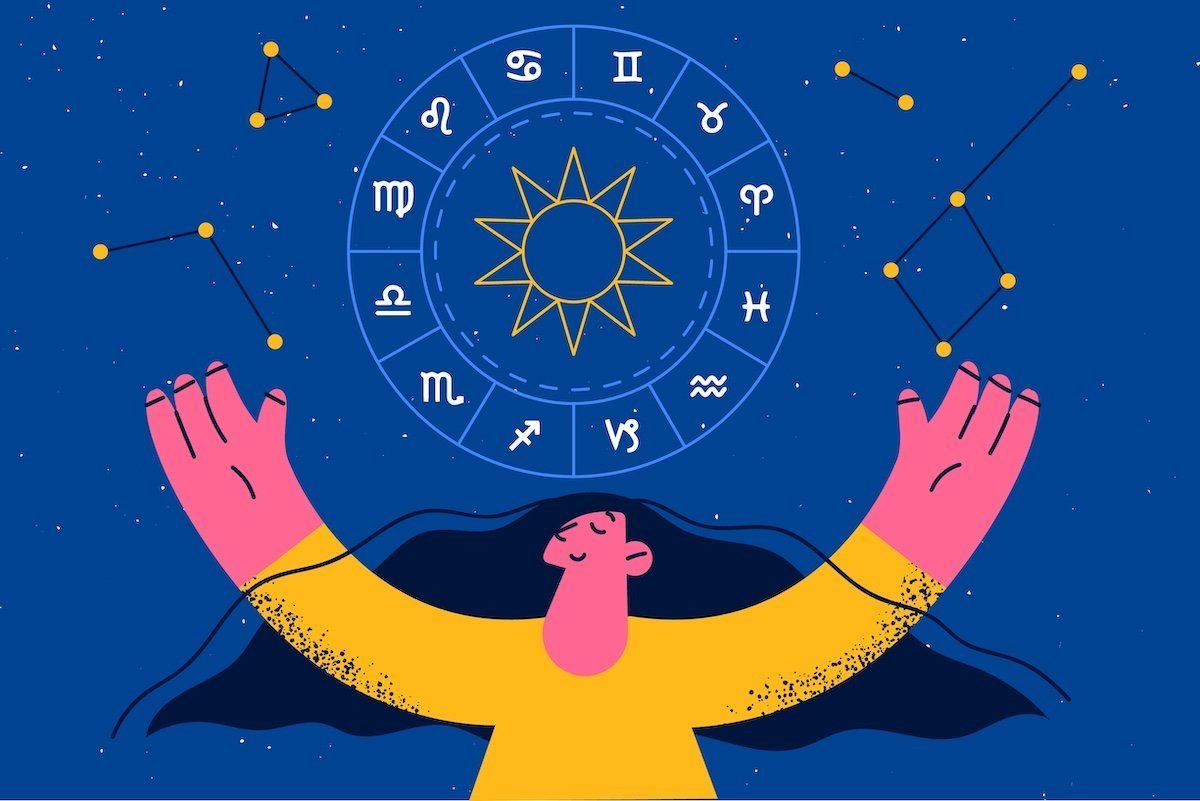
Increasing numbers of Gen-Z are turning to astrology to find meaning
In fact, a re-analysis by Professor Suitbert Ertel of the University of Göttingen, Germany, found that the Carlson Test may actually validate astrology's influence rather than discredit it. He “revealed that the results of the valid [Carlson] tests (#3 and #4) favor astrology to a statistically significant level — in spite of the many disadvantages that the astrologers faced.”
The truth is that the scientific evidence remains inconclusive. While some reports suggest that astrology is a pseudoscience with little merit, others point to potentially significant correlations between the planets and our personal lives.
FAQs
Is Astrology Based on Science?
Astrology is not currently recognized as a conventional science, though some studies suggest correlations between planetary positions and human traits that remain debated.
Why Is Astrology Still Popular Today?
Astrology offers meaning, reflection, and psychological insight, making it appealing during times of uncertainty or personal transition.
What Is a Birth Chart in Astrology?
A birth chart is a map of planetary positions at the moment of birth, believed to reflect personality traits, life themes, and emotional patterns.
How Is Astrology Different From Daily Horoscopes?
Daily horoscopes focus only on Sun signs, while full astrology considers planets, houses, aspects, and timing for deeper interpretation.
Is Astrology The Same As Astronomy?
No. Astronomy studies celestial objects scientifically, while astrology interprets their symbolic meaning in human life.
Does Astrology Predict the Future?
Astrology does not predict fixed outcomes but highlights potential themes, influences, and choices based on planetary cycles.
Takeaway: Exploring Astrology
So, is astrology real? Science has yet to answer that question. I would argue that if something held no merit or truth, it would not survive the test of time. Astrology, assuredly, has stood the test of time, surviving for thousands and thousands of years. And, as statistics show, it is seeing a resurgence, especially within younger generations who are searching for meaning.
As Jessica Eastwood from Oxford Brookes University explains: “Astrology’s growing popularity isn’t just a trend — it reflects a broader shift in how young people seek meaning, identity, and connection. For some, astrology is entertainment; for others, it provides a genuine sense of guidance and belonging.”
Perhaps the question of whether astrology is real or not isn’t the question we should be asking. Rather, we should be asking, “Does this add value to my life? Does this help me to be more self-aware and live more aligned with my purpose?”
If astrology adds true benefit to one’s life, then it is as real as objective reality. But if astrology does not benefit someone and causes more fear than growth, then it should be abandoned.
Not everyone needs to believe in astrology, and we don’t always need scientific evidence to know if something is real or not. There are certain things in life that science has yet to measure, but that does not mean they are not real or valid.
If you truly wish to know if astrology is real or not, then I encourage you to investigate your own chart. Book a reading with a qualified astrologer or start studying your chart yourself. Come to your own conclusions. Either way, you’ll learn more about yourself along the way — and that’s what matters most. ●
Images shutterstock/Shyntartanya, shutterstock/AlphaVector, shutterstock/AlphaVector, shutterstock/Who Is Danny
happiness.com | The fine art of being: learn, practise, share
Are you a happiness.com member yet? Sign up for free now to:
■ enjoy our happiness magazine with practical life tips
■ share and support in our happiness forum
Dream Interpretation | Non-Duality | Spirituality | Tarot Reading
Written by Rhianna Quanstrom
 Rhianna Quanstrom is a freelance writer, herbalist, and spiritual seeker with a passion for nature-based healing and sacred wisdom. Her writing draws from years of experience with meditation, shamanic practices, plant medicine, dream work, and the reclamation of the Sacred Feminine. Discover more of her writing and poetry on her Mystic Love Substack.
YOU MAY ALSO LIKE
Forum discussions
-
- 2 replies
- 2,241 views
-

- tx****
-
so , off lately i am ruminating about existencial thoughts , who are we , why are we here on this earth , what is tge purpose of life , what is inside human beings , do we choose the life ?
By am**** , in Mental Health Forum
- 3 replies
- 3,401 views
-

- RH****
-
Everyone has his own version and meaning of happiness, I just wonder
By An**** , in Happiness & Life Advice Forum
- 6 replies
- 2,984 views
-

- Ro****
-
- 4 replies
- 48,076 views
-

- Fa****
-
- 1 reply
- 2,731 views
-

- Li****
Join the conversation
You are posting as a guest. If you have an account, sign in now to post with your account.
There are no comments to display.